
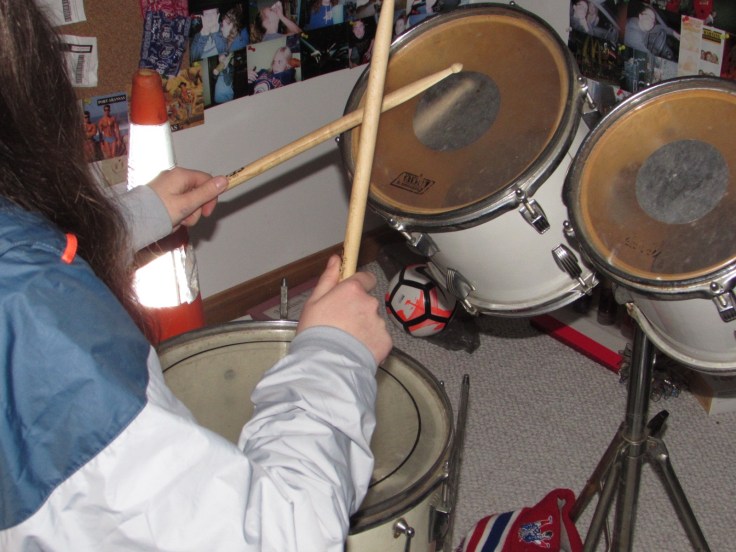
Scientists have found that when music is played, whether you are playing it yourself or listening to someone else play, it switches off genes that signal stress alerts to our minds and bodies. You don’t have to be musical or play an instrument to experience the benefits of music for stress reduction.
Stress causes negative responses in the body, which suppresses the immune system and is not healthy. Neurologist, Dr. Barry Bittman, held a case study where he took groups of average stressed people and gave them things to do. They all originally came in with stress genes turned on. He told the first group to just sit in a room and chill out; they read magazines, talked, etc. The second group was told to make music together. The first group who just ‘chilled out’, showed a slight reversal in genomic responses with an average of six out of forty-five genes reversed. The second group who composed music together reversed an average of nineteen out of forty-five gene markers of stress. Playing/making/listening to music was found to be 3 times more stress reducing than just chilling out. The point of this study was to not just show was music does, but also what it undoes. Next time you’re stressed or overworked, try making some music.

According to Joan Borysenko, Author of the foreword in Music Medicine, the simultaneous state theory in psychology points to how impossible it is to be in two opposing states at the same time. Think about it, it’s hard to be angry when you’re laughing, it’s hard to be stressed when you’re relaxed, and so on. This activation/deactivation principle applies to the elements within music medicine and how it can affect your emotions.
Music can trigger reunion grief for some people. Reunion grief is known as a healing experience of what scientists say occurs by reconnecting with something that had been missing. This emotion usually consists of happy crying and can be triggered or shoved by a song. Borysenko says, “Healing is a process of bringing back into life what is missing; it is a process of becoming whole”. When music is generated as healing, devotion, or spiritual communion, it can transform the musician and the listener easily. Like breathing, listening to music is the inhale, expressing sound is the exhale — both directions create healing opportunities which scientific studies have shown to be effective. In order to receive the healing powers of music, you must remain to be open to receive and willing to express yourself. Being open minded is tough, but a major key in life. Click here to learn more about having an open mind.
Music therapy has been used to retrain brains back to speaking. Congresswoman Gabrielle Giffords survived a gunshot to the left hemisphere of her brain. Through singing with her music therapist, Giffords began improving in speech. Melodic intonation therapy (MIT) is known as rehabilitation in song. This is used for stroke patients, injured brain patients, etc.
 Music as Medicine
Leave a comment