Scientists have found that when music is played, whether you are playing it yourself or listening to someone else play, it switches off genes that signal stress alerts to our minds and bodies. You don’t have to be musical or play an instrument to experience the benefits of music for stress reduction.
Stress causes negative responses in the body, which suppresses the immune system and is not healthy. Neurologist, Dr. Barry Bittman, held a case study where he took groups of average stressed people and gave them things to do. They all originally came in with stress genes turned on. He told the first group to just sit in a room and chill out; they read magazines, talked, etc. The second group was told to make music together. The first group who just ‘chilled out’, showed a slight reversal in genomic responses with an average of six out of forty-five genes reversed. The second group who composed music together reversed an average of nineteen out of forty-five gene markers of stress. Playing/making/listening to music was found to be 3 times more stress reducing than just chilling out. The point of this study was to not just show was music does, but also what it undoes. Next time you’re stressed or overworked, try making some music.
According to Joan Borysenko, Author of the foreword in Music Medicine, the simultaneous state theory in psychology points to how impossible it is to be in two opposing states at the same time. Think about it, it’s hard to be angry when you’re laughing, it’s hard to be stressed when you’re relaxed, and so on. This activation/deactivation principle applies to the elements within music medicine and how it can affect your emotions.
Music can trigger reunion grief for some people. Reunion grief is known as a healing experience of what scientists say occurs by reconnecting with something that had been missing. This emotion usually consists of happy crying and can be triggered or shoved by a song. Borysenko says, “Healing is a process of bringing back into life what is missing; it is a process of becoming whole”. When music is generated as healing, devotion, or spiritual communion, it can transform the musician and the listener easily. Like breathing, listening to music is the inhale, expressing sound is the exhale — both directions create healing opportunities which scientific studies have shown to be effective. In order to receive the healing powers of music, you must remain to be open to receive and willing to express yourself. Being open minded is tough, but a major key in life. Click here to learn more about having an open mind.
Music therapy has been used to retrain brains back to speaking. Congresswoman Gabrielle Giffords survived a gunshot to the left hemisphere of her brain. Through singing with her music therapist, Giffords began improving in speech. Melodic intonation therapy (MIT) is known as rehabilitation in song. This is used for stroke patients, injured brain patients, etc.
Author of Music Medicine, Christine Stevens, believes that guided practices for the medicine of music can release tension, bring healing, and provide energy. To watch and follow along with guided practices, click here.
Listening with Your Body: Start with preparing yourself to receive the rhythm with an open mind. Breath deep and then exhale a sound of release. Set an intention to allow the rhythm to enter a particular part of your body. Say out loud, “I am inviting the healing of rhythm into blank part of my body”; then place your hand on that body part to direct the rhythm energy while you are listening to a calming tune. As you listen, sit absolutely still and resist the temptation to move with the beat. This circumvents the automatic pathways for rhythm into your body to provide a deeper occurrence of healing.
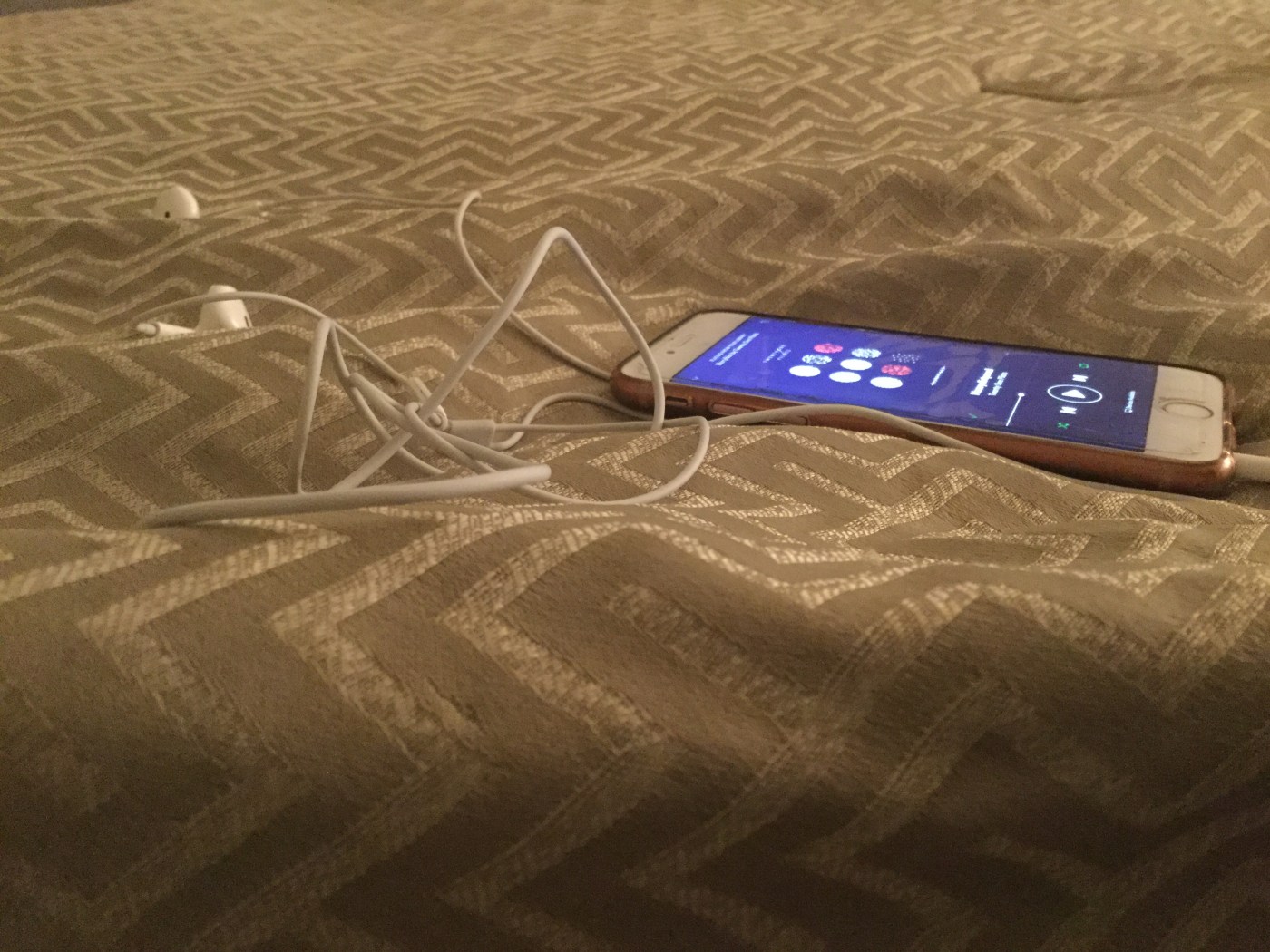
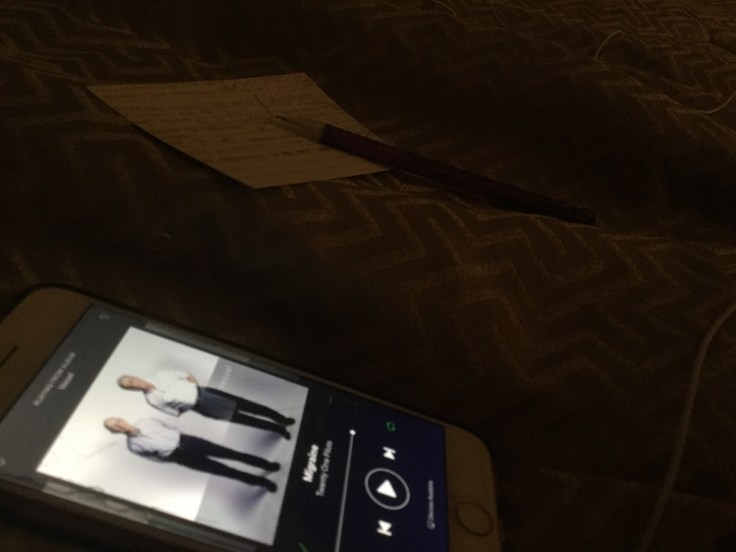
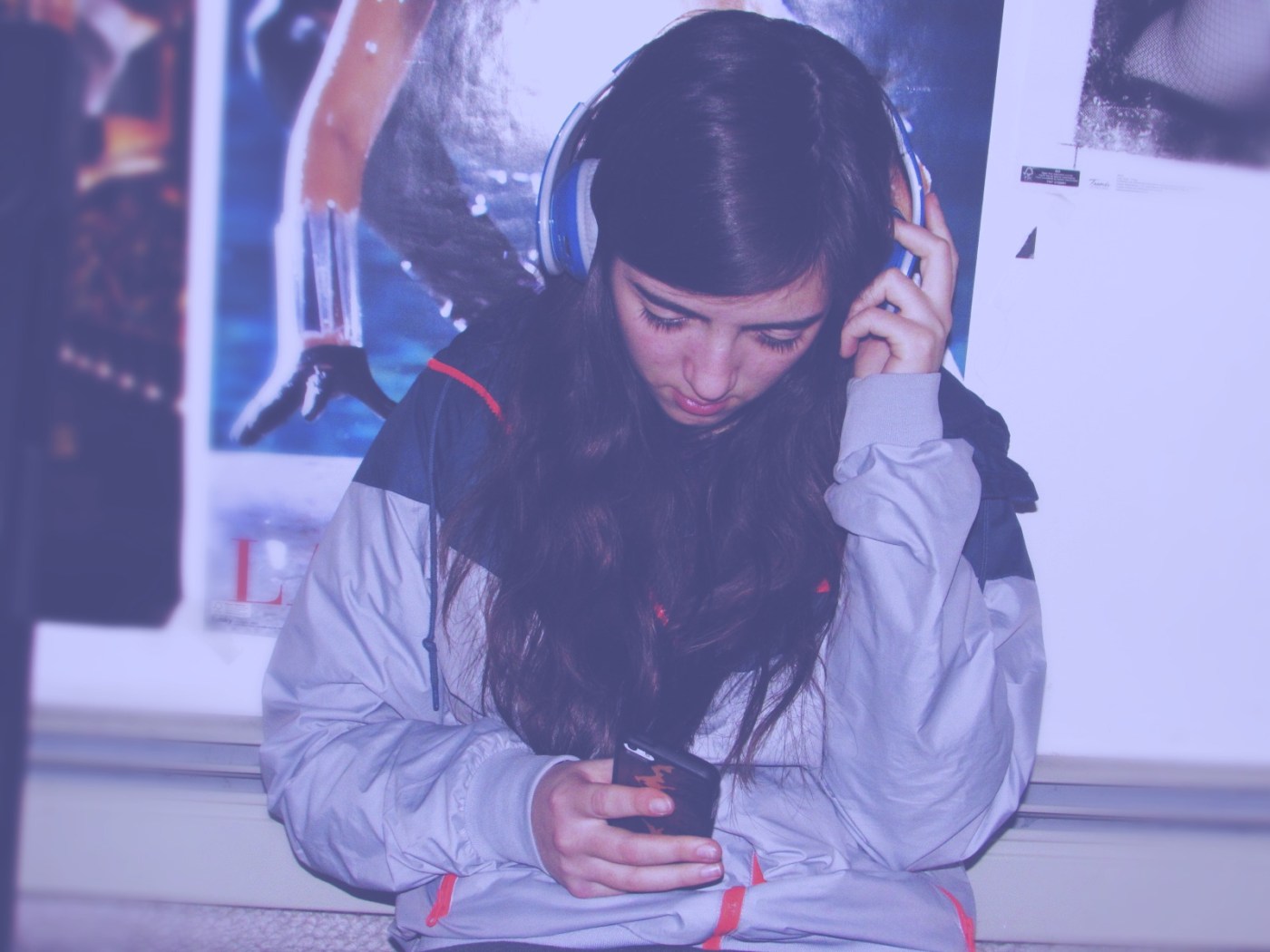
I use this guided practice whenever I need to open up my mind or if I need help breathing calmly. The trick is to sit still and focus on the music. The song I use often is Anathemaby twenty one pilots. Resisting the temptation to move to the beat, I held my hand on my chest and focused on healing that part of my body.
Drum-Massage: This practice is known to loosen up the patient and allows the body to receive the vibration of the drum by listening deeply. Choose a drum with a deep tone; like a hoop or frame drum. Play the drum near but not exactly at its center to really hear it sing. Position the drum about two inches away from yourself, without it touching the body. Play a simple pulse at a tempo that feels comfortable in order to feel the energy and vibration against your body. This is called the sonic ultrasound.
Drum Prayer: This practice is for if you want to send energy to someone or a play in the world. The drum will be your prayer partner in the practice. First, set your intention. Think about who or where you want this prayer to go. Hold a moment of silence to think. Whenever you’re ready, play out a beat on the drum that portrays your intention. Drum the tone of the energy of your prayer, not the word phrases you are thinking. When you are finished, soften your playing to eventually fall back into silence. Visualize where the prayer is going, and let it get there.
Play with Nature: Choose one of your favorite places to go to in nature where you feel a sense of peace. Let your soul listen to the sounds around you. The music of the world should play for you. Isolate just one sound that you resonate most with. Focus and listen to that one sound and find your peace.
From little babies to full grown adults, music can grab a hold of our attention. Merzenich says that music therapists use this factor to target attention and impulse control goals for a patient. Both skills being basic strengths we need in life to function and succeed.
A lot of schools use music to learn without extra funding. To prepare for big exams, like midterms or finals, I usually listen to songs or albums while studying my notes. This helps me easily remember the things I need to know. When going back over the information, I remember what music I was listening to when studying it and relate it to the content. Personally, this musical way of studying really helps me remember what I need to know.
Music has an inherent structure and emotional pull that makes it easy to remember concepts and ideas. This effective mnemonic device can tag information in our brains, making it easier to learn and easier to later recall.
Our sense of smell has the number one ability to stimulate our memory very powerfully. Music comes next. Merzenich tells us that older adult who suffer from dementia now work with a music therapist to find very effective results. Music can tap into the patient’s memory and trigger a certain time or place they remember from earlier in their life. Without music, they wouldn’t be able to remember these certain memories.
Melody harnesses the power of memory from learning information to recall past experiences. Melody is known to be a carrier wave of remembrance. Cases have shown that patients with Alzheimer’s disease remember lyrics to favorite songs, despite their severe memory loss. Songs can be in the back of our head forever, and researchers call this the “Earworm Effect”. Ninety percent of people experience this feeling, on average, at least once a week. The Earworm Effect is what helps us remember songs to help us pass tests, learn information, and remember facts or figures.
A soft and peaceful melody played slowly can create comfort and calm for a restless heart.
Music can cause tears to come and emotions to burst forth, therefore ‘pulling on our heartstrings’. Christine Stevens says the term heartstring actually comes from the term chordae tendineae, which are known as the tendons that open and close our heart valves. Emotional and physical heart centers are often in need of healing and music can help with that. The feeling of a closed heart can feel tight, restricted, and burdened. The medicine of melody allows a release of the burdens we hold in our hearts. A song can sometimes say exactly how we feel, providing an immediate sense relief.
Heart disease is on the rise at alarming rates. Seventy-six million people in the United States currently undergo stress related hypertension (high blood pressure). Seventy-one percent of those people are using antihypertensive medication. Music therapy can be used to prevent these types of overwhelming issues. If you are feeling stressed, try using music to heal yourself, rather than become one of those seventy-six million people. Use music as medicine rather than risky prescription drugs.
Music therapy can work for all ages, including newborn babies! Studies have shown that if pregnant mothers play or sing a song for their baby in the womb two to three months before birth, babies will recognize the tunes after birth. Just two to four days after the baby is born, it can recognize the song the mother has played for it. Playing these songs for the babies resulted in a decrease in heart rate and movement making the babies calmer. They also became more alert, compared to no response when other songs were played.
A decrease in lung capacity can lead to greater risk of heart disease. Adults often tend to hurry through the day, raising the risk of running out of breath, literally. When out of breath, our blood becomes less oxygenated, decreasing our lung capacity. Stress can also lead to shallow breathing, decreasing lung capacity. Christine Stevens has found that lung capacity has been found to be a largely significant predictor of heart problems, stroke, respiratory disease, cancer, and other causes of death. This study shows that even healthy people need to pay attention to breathing to stay healthy.
Hearing music can quicken your breathing, increase your heart rate, or send shivers down your spine. Karen Merzenich, author of Top 12 Brain-Based Reasons Why Music as Therapy Works claims that qualified music therapists can use this outcome of music to help someone physically relax their body, or even help stimulate a person in a coma.
Teacher Clive Robbins and composer Paul Nordoff created a center for Music Therapy in New York, founded in 1961. Currently, the music center is treating children with cerebral palsy, autism, Asperger’s disease, and other patients with developmental delays. Their mission is to transform lives through music and reach every child’s developmental potential.
Merzenich, admits that we don’t know why, but our brains are wired to respond to music. Even though music is not ‘essential’ for our survival, our motor systems naturally match to a rhythmic beat. When we hear music, it inputs through our central nervous system (the auditory nerve) and most of the input goes to the brain to be processed. Although, some of the input leads to motor nerves in our spinal cord. This is what allows our muscles to move to the rhythm without trying. This is also why music therapists can help patients who have had a stroke. They can re-learn how to walk, and develop strength in their upper bodies with this method. Shared neural circuits in the brain are triggered by listening to or singing music with lyrics. Music therapists use this ability of music to help someone re-learn how to talk again after having a stroke.
Hello World! My name is Colleen. I am sixteen years old, a junior in high school, and my life revolves around music. Ever since I was little, I’ve interpreted music into so many parts of my life. Personally, I use it to cope with my crippling depression and anxiety, my body disorders, my learning disabilities, and so much more. I will be updating my blog daily to show you how music therapy has affected so many lives and can change yours too.
The Chinese word for medicine, yao, is derived from the word for music, yue.
Music therapy is known as the skillful use of musical elements to develop, maintain, and restore mental, physical, and spiritual health. Music has nonverbal, inventive, structural, and emotional qualities. It’s used as a form of meditation, that can turn off the thinking of the mind. Unlike prescription medicines, music impact is felt immediately. Music can be portrayed as a supplement, a daily vitamin for your health and well-being. Music therapy is an affordable, simple, enjoyable strategy to reduce pain. Follow along with my blog to compose a daily routine for your spirituality and health.
Click Here to watch a quick video on the introduction to music therapy.
Something everyone knows about me is that I love concerts. I love the thought of them, the production of them, and especially attending them. Concert going is one of the many forms of music therapy I use to help myself; they’re like the medicine I need to survive. In my opinion, concerts are so good for self-help. Seeing your favorite artist in person is an experience I can barely put into words. The atmosphere and the energy in the room immediately lifts my state of mind. The people you meet are incredible, whether you talk all day to pass time while waiting in line, or make a life long friend. The feeling of anticipation is a natural high I feel with nothing else. Not to mention the calories your burn jumping up and down for hours, the memories you gain are unforgettable.
Here is a picture of me at the 97x Tampa NBT Concert. I traveled from Massachusetts to see my favorite band in December of two thousand and fifteen. This was the best day of my life. After getting there at eight in the morning and waiting until ten at night, the fourteen-hour wait in ninety-degree weather was so worth it. I’ve never experienced such an emotional release before, it was like all the weight on my shoulders was finally lifted after sixteen years. Here are some memories from that day and other concerts I have attended.
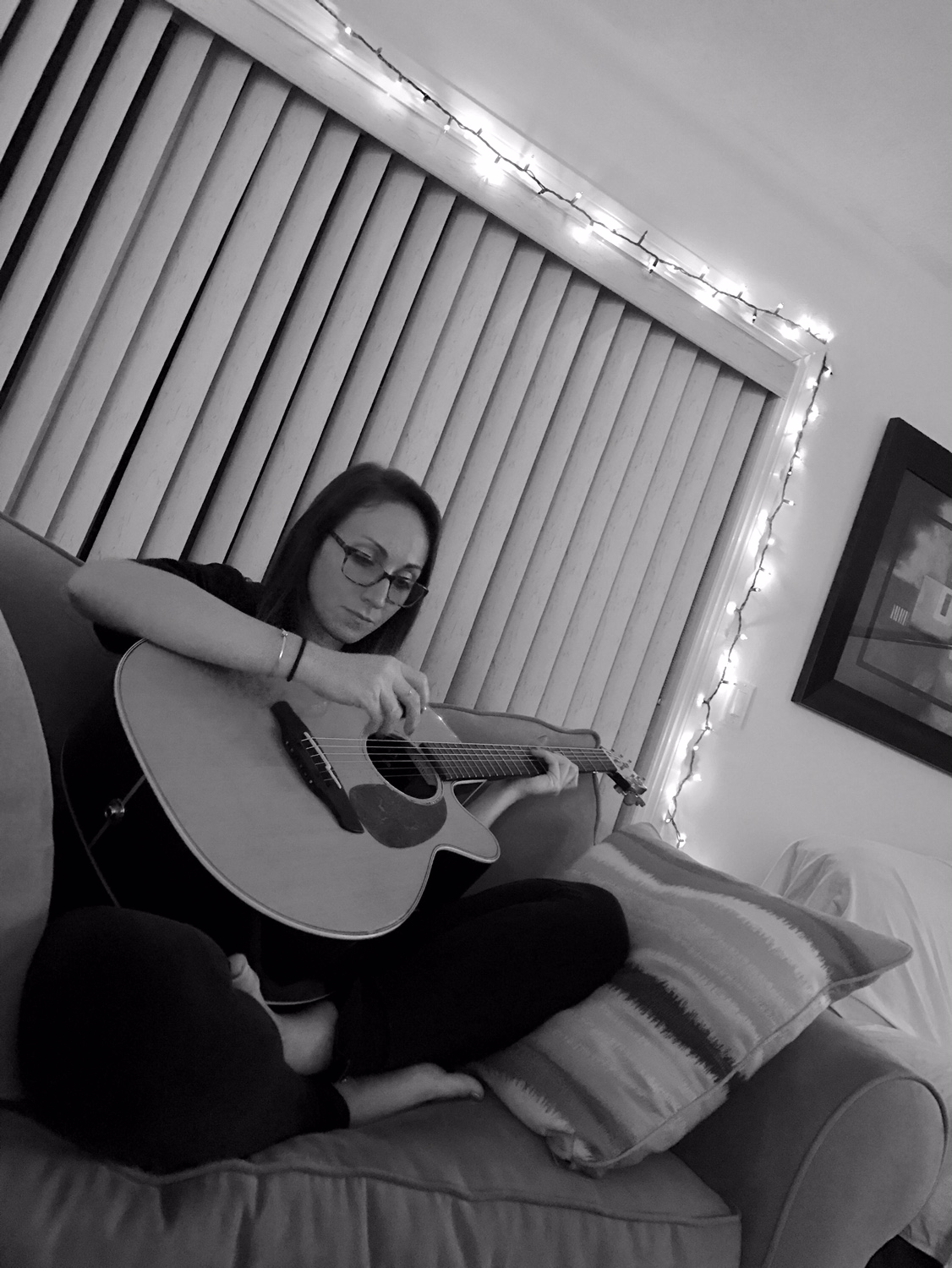
To get more personal aspects of Music Therapy, I interviewed my sister, Shauna, and her boyfriend, Dan.
Shauna:
Q: How Has Music Affected Your Life? A: Music has affected my life in a very positive and enlightening way. Growing up in the 90’s and 2000’s I’ve been influenced by many varieties of music. My personal favorite when I was young was, of course, NSYNC*, Backstreet Boys, Britney Spears. But I also liked punk music, rock, and rap. I don’t think I had that much of a connection with music until I was about 16. I started researching songs and memorizing lyrics, and the more lyrics I read the more connected with the artists I felt. Having that teenage angst that most teenagers have, some lyrics to punk/ pop songs would be very relatable. My first real experience with live music was an American idol concert I went to when I was 16 (lol). Ever since that concert experience, I have been obsessed with live music. Even now at 26 years old, I try to go to a few concerts a year. The connection you get with an artist at a concert is unlike any feeling I can explain. It’s much more emotional and personal even though I’m 1 of 50,000 people. Sad songs affect me a lot, I really can feel the emotion from some of my favorite artists when I listen to sad or slow songs by them. Happy songs do the same for me. If I am in a horrible mood and I listen to my favorite band, my mood is instantly better. Q: In What Ways Has Music Helped You? A: Music has helped me get through so many tough times in my life. Having chronic depression and anxiety, music is an escape for me. It allows me to focus on the lyrics and beats and not think about what is burdening me at the time. Specific lyrics have helped me get through difficult situations as well. I actually have lyrics from my favorite song tattooed on my body! There are times when I can’t find the words that I’m trying to express but certain lyrics describe the feeling perfectly. Q: Can You Give a Specific Example Or Time When Music Has Helped You? A: I have a lot of examples of how music has moved me but there is one that stands above the rest, literally. I brought my sister to a twenty one pilots concert year ago. This band means absolutely everything to her and I knew it was going to be amazing. After standing in the pit area for 9 hours to hold our spot and get front row, they came out. I guess I can describe the feeling I had as a sense of overwhelming happiness/ anxiety/ stress/ relief all in one. I looked at my sister who was crying which instantly made me cry more than I already was. I was so happy at that moment that I almost felt like I could never experience that feeling again, until the end of the show.
During the last song, Trees, the two band members come out into the pit area and stand on these 4×4 rectangular platforms. It’s only large enough for maybe 3 fans on each side to hold and it’s just luck if you happen to be standing in the area the platform is lowered onto. Well, Colleen and I were standing in the exact spot the platform was put, our hands literally went into the handles of this thing, it was ridiculously lucky. Tyler comes out and starts climbing from the security barricade to the platform, now he’s inches from us that if we wanted we could hold his ankles and legs. I pulled colleen closer so she could get a better grip on the platform. He finished the song, was smiling saying thank you to the fans then got down and back onto the main stage to bow with Josh. The last song they perform is a really emotional song for both Colleen and me so it was a really perfect moment. This experience moved me in such a powerful way that I didn’t know existed until that day. We stood in each other’s arms as everyone cleared out of venue just crying. It made Colleen and I connect on a level we have never connected on before.We’ll always have this to look back on and remember how amazing this experience was and how fortunate we are to have gone. I was so moved by this experience and will never forget it. I watch the videos from this concert whenever I am having a bad day with my depression and even though it makes me cry, I still feel better. It was an even better experience for Colleen since this band is more than just music to her, so just being able to take her to see them was so important to me. Q: How Do You Feel About Music Therapy Helping The Rest of the World? A: Music therapy definitely needs more recognition this day and age. With the growing problem of teenage depression, integrating music into psychology could be a very helpful resource for teens. Schools are starting to have more music programs which helps this become a reality. A lot of people, including myself and Colleen, use music as means of therapy already. If my depression is at its worst, I listen to music. A lot of the time I listen to classical since it is calming. Having really bad anxiety, I can’t really go into busy stores or malls but something I have learned helps me is wearing headphones when I go into these places. I’ll listen to classical or twenty one pilots usually. It doesn’t completely make the anxiety and panic go away but it definitely helps. Q: How Can We Spread The Word On How Important Music Therapy Is? A: In college, I did a paper on the positive effects of music therapy on adolescents in a research methods class. Doing the research for this I discovered so much on the subject that people are not even aware of. It’s really up to psychologists and Doctors who are interested in the subject to get the word out there since they can take action and preach the therapy to those in need. Music, chorus and band teachers can also take action by creating more opportunity for music therapy classes to be in schools.
With the constant use of social media, anyone can get out there and start a blog or website discussing music therapy with others.
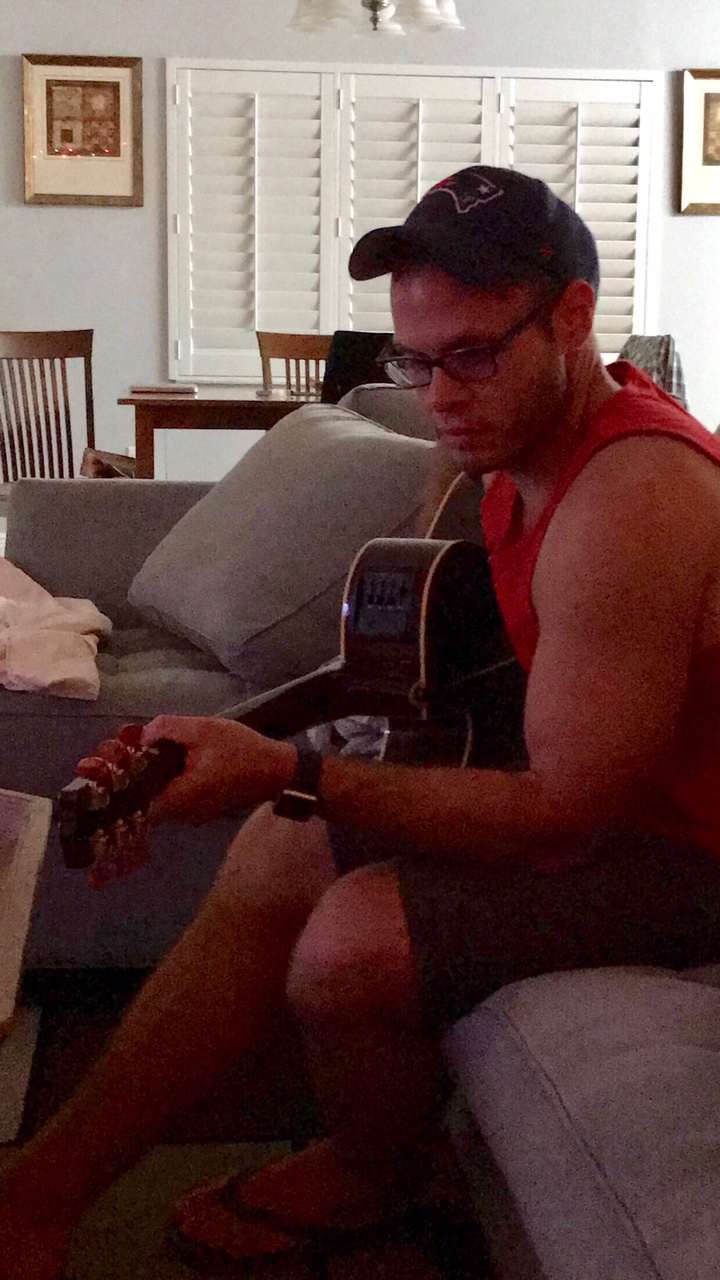
Image by Dan MitchellImage by Shauna McNally
I asked Shauna’s boyfriend Dan to share his opinions and answer some questions as well.
Q: How Has Music Affected Your Life? Dan: I have been lucky to say that music has affected my life in many positive ways. For a portion of my life, I have been able to make a living writing/performing music. Many of my closest friendships have been made because of my connection with music. Music has been able to give me opportunities in life that I may not have had otherwise. Q: In What Ways Has Music Helped You? Dan: Music has helped me to cope during difficult times in my life. Whether it has been dealing with the loss of a loved one, or just having a difficult day at work, music has been able to transport me to a positive place.
Q: What’s a Specific Example of How Music Has Moved You? Dan: The way I use music therapy is looking back on the times music has moved me and using that as inspiration for my depression. Q: How Do You Feel About Music Therapy Helping The Rest of the World? Dan: Music therapy has been used to help patients with Alzheimer’s, developmental disabilities, and other forms of mental health issues. I feel there is still much to learn about the way the brain reacts to certain sound waves pertaining to music, but studies have been able to show, and ultimately prove, that there is a connection with the way we are able to use music therapy to help cognitive development within these patients. Q: How Can We Spread The Word on How Important Music Therapy Is? Dan: The only way to increase awareness is by educating others on the importance of music therapy, and by showing results of current testing that has been administered.
When you suffer from depression, you cannot concentrate. You have low energy all the time, unexplained aches and pains, a weight on your heart you can’t shake, and so much more. Music can serve heart connection, emotion expression, and healing for a human suffering from any type of depression. Studies have shown that listening to or singing a song can provide extreme mood improvement. It can move your focus toward the positive and lift the symptoms of the depression. Christine Stevens says, the positive effect of and sense of support found in singing is known to decrease loneliness, sadness, anxiety, and depression.
Some children (whether in foster care or have divorced parents) experience a condition caused by a lack of bonding with parents at an early age; this is called attachment disorder. This condition can lead to a lack of trust and resistance to forming relationships as they grow. This can cause severe damage to the child’s soul from the cycles of abuse. Stevens worked as a social worker and music therapist at a foster care. She created a repeating music group activity for the kids to increase bonding and heal damage. She believed music creates easier access to a child’s soul than talking does; she was right. Her approach was effective, resulting in the kids naturally finding good sound together, transferring energy into soul-level healing and creating trust. Author of Bowling Alone, Robert Putnam’s research demonstrates that participation in group activities and building our social capital automatically translates to more happiness, better health, and a sense of purpose in life.
Studies have shown our brain’s sympathetic mirror reaction is triggered by hearing a sound associated with an action. Researchers have found that musical gestures -hand movements, conducting, the playing of an instrument, facial expressions while singing- resonate with the mirror neurons in our brains. They found that watching these gestures excites the mirror neurons in the motor and emotional brain like we were performing ourselves. Music’s motion could possibly be the emotion that moves our souls.
The Institute of Neuropalliative Rehabilitation in London composed a study proving the importance of creative music therapy for adults with chronic mental illnesses. Researchers found that improvisation in music provides a sense of identity for the patient, which enables the shift from disempowerment to empowerment. Improvisation also shows active participation in patients and a sense of control, skill, and success. All of these factors are strong, much-needed healing attributes for people facing chronic mental illnesses such as crippling depression and bipolar disorder.




 Music as Medicine